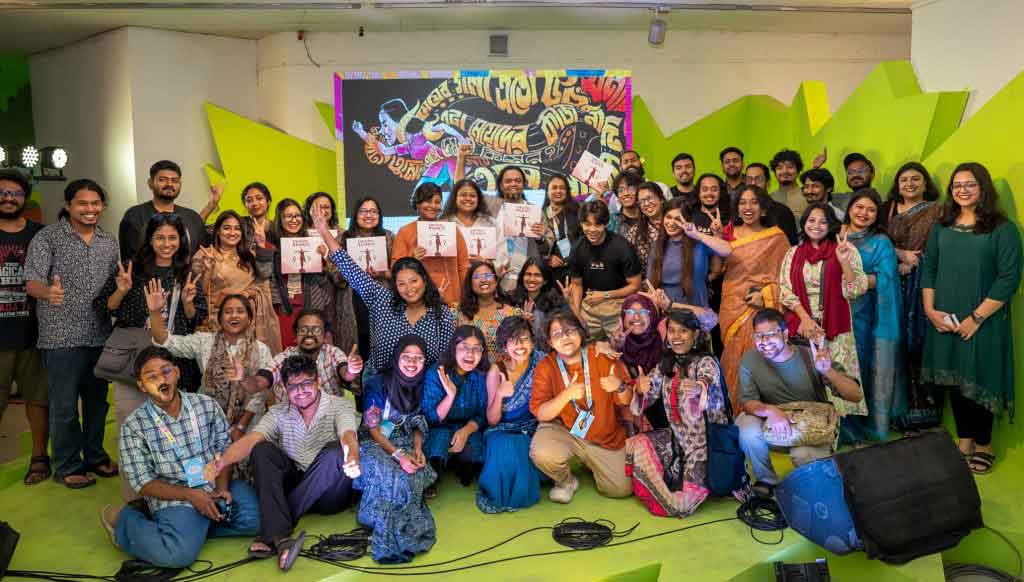
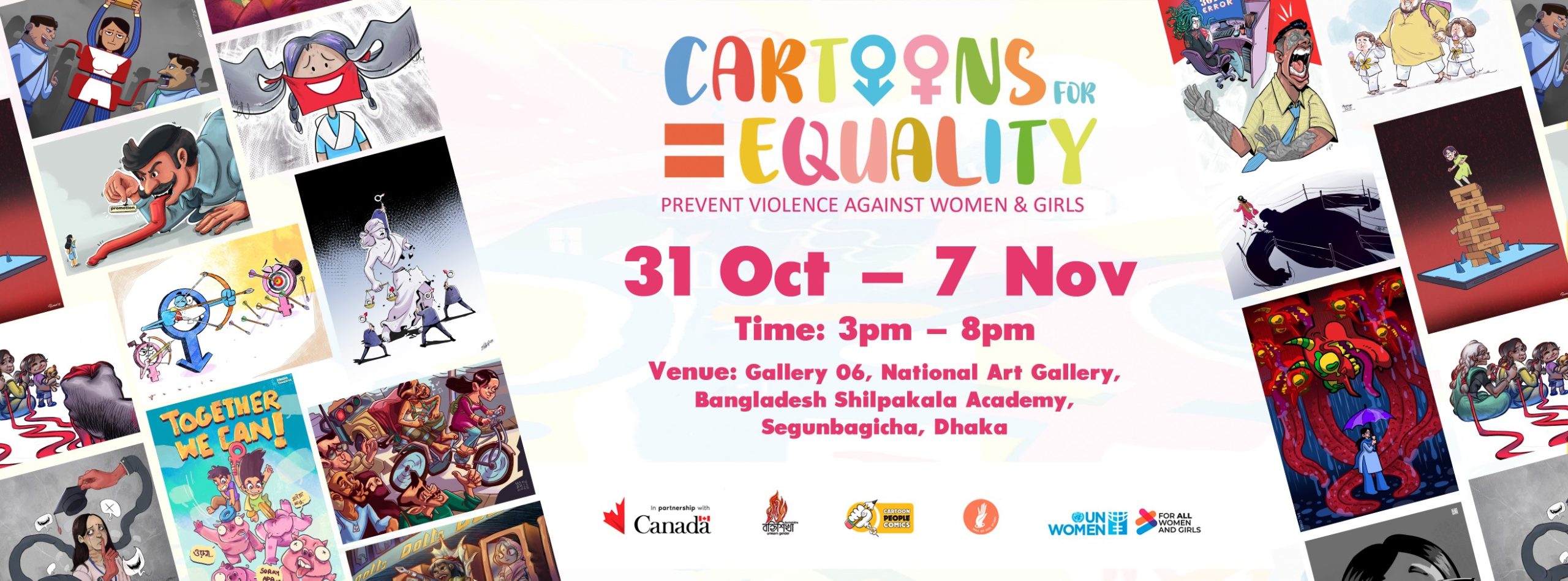
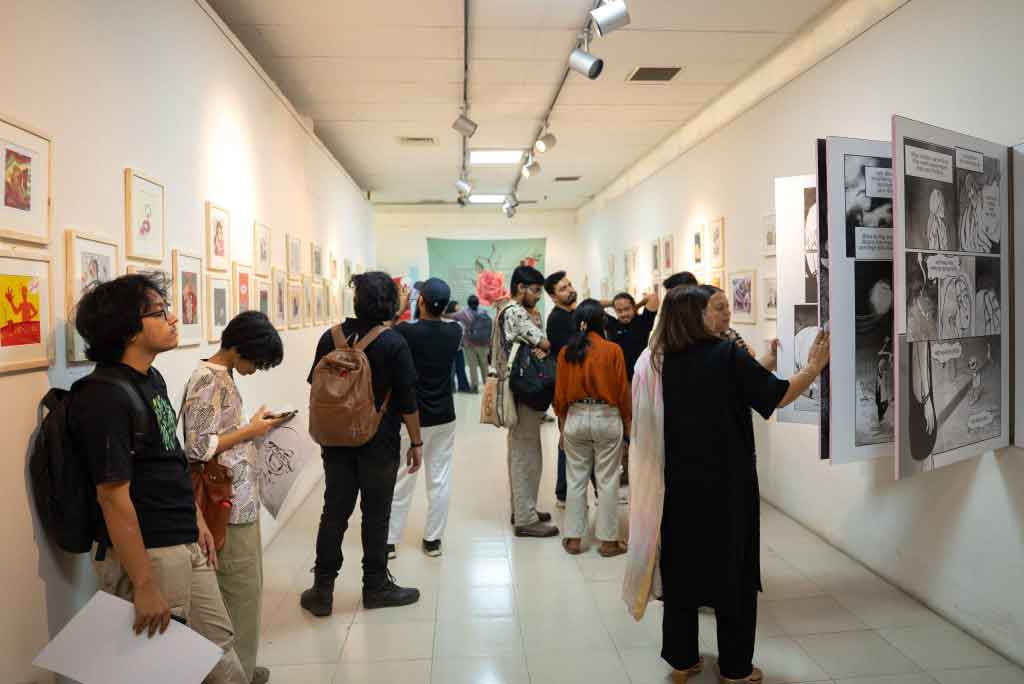
Cartoons for Equality is a powerful 10-day cartoon and illustration festival dedicated to raising awareness about gender-based violence, social injustice, and equality. Organized by Cartoon People, Bonhishikha , and Maa Er Doa Studio in partnership with UN Women Bangladesh, the festival brought together more than 215 artworks created by artists across the country. Through live murals, workshops, installations, interactive activities, and vibrant illustrations, the event transformed art into activism and encouraged visitors to reflect on society and engage in meaningful conversations. Cartoons have always played an important role in protest and public discourse, and this festival celebrated that tradition by showcasing works that challenge stereotypes, expose everyday injustices, and inspire social change.
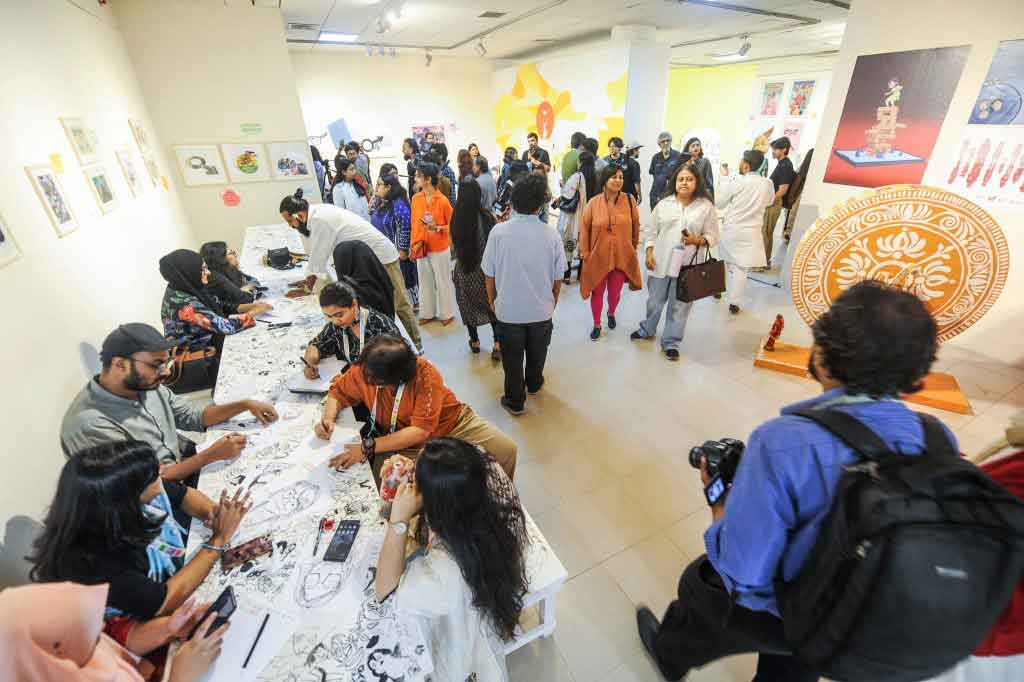
For over a decade, Cartoon People has played a significant role in shaping the modern Bangladeshi comic culture. Through community-driven workshops, exhibitions, festivals, and mentorship, Cartoon People has created accessible spaces where aspiring cartoonists can learn, practice, and grow. Its open, collaborative environment has helped young artists gain confidence, refine their skills, and tell authentic Bangladeshi stories. This vibrant artistic community—built on creativity, solidarity, and social awareness—has become a hub for emerging talents across the country. Recognizing this long-standing impact and Cartoon People’s ability to mobilize young creators around social issues, UN Women partnered with Cartoon People for the Cartoons for Equality project. Their collaboration reflects how powerful and influential this artistic community has become in shaping conversations about equality, justice, and social change in Bangladesh. This contribution adds meaningful depth to the festival, connecting its message with the ongoing growth of the country’s contemporary cartoon and illustration landscape.
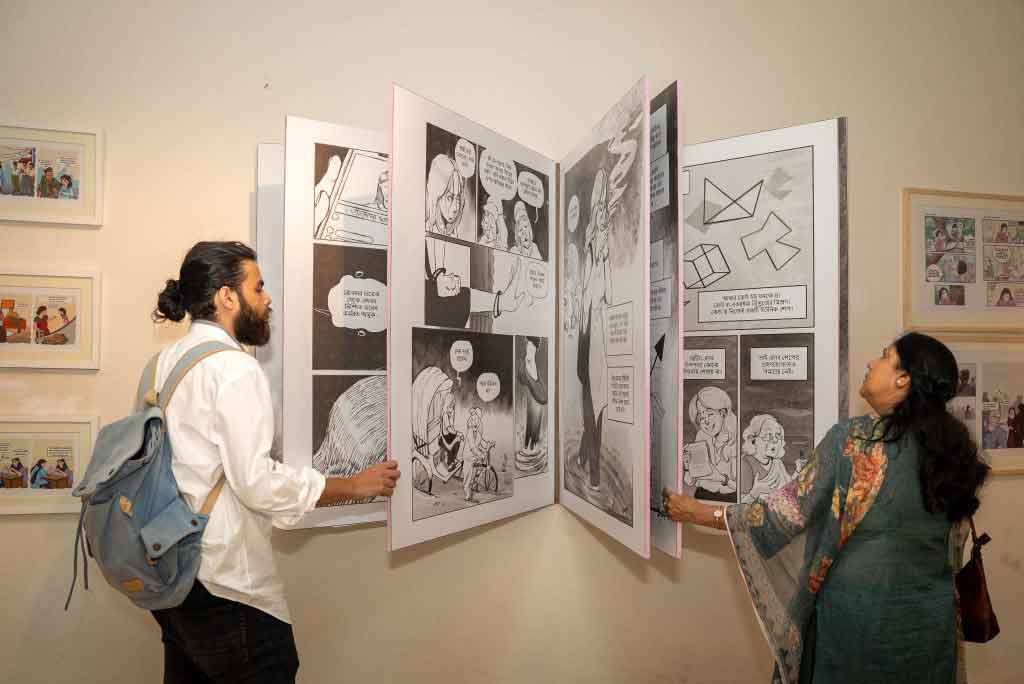
The impact of the festival began long before opening day. Although the artworks were originally submitted through email, many of them were shared publicly in Cartoon People’s Facebook group, reaching more than 55 lakh people online. The reactions revealed just how divided society can be. Many viewers expressed strong support, while others denied the existence of harassment in workplaces, public spaces, homes, or online. This contrast, rather than discouraging the artists, only strengthened their resolve. Tanmoy reflected that cartoonists felt inspired by each other’s courage, even when faced with hateful comments. They were reminded that their art was making people talk, and conversations—both supportive and critical—meant the message was reaching the public. That is the true power of cartoons: they provoke thought, start dialogue, and push society to reflect.
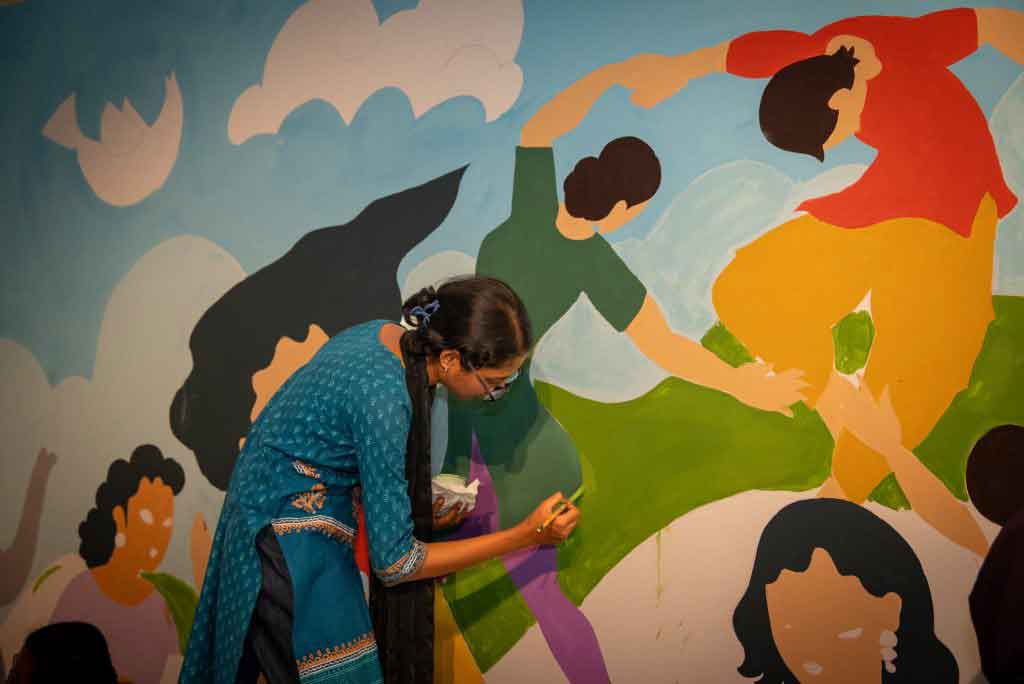
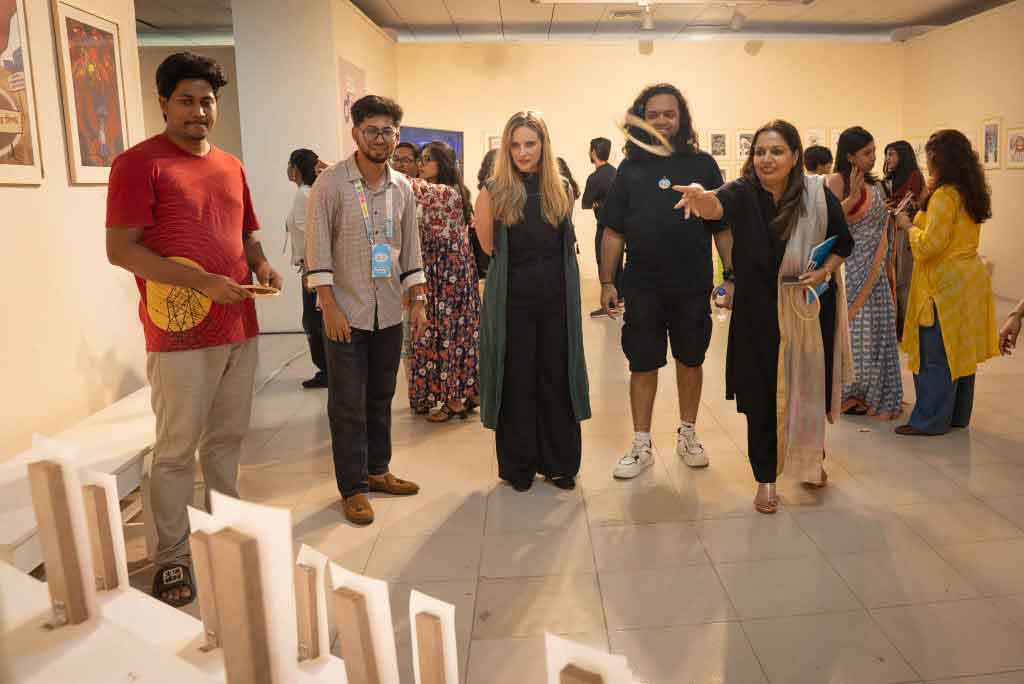
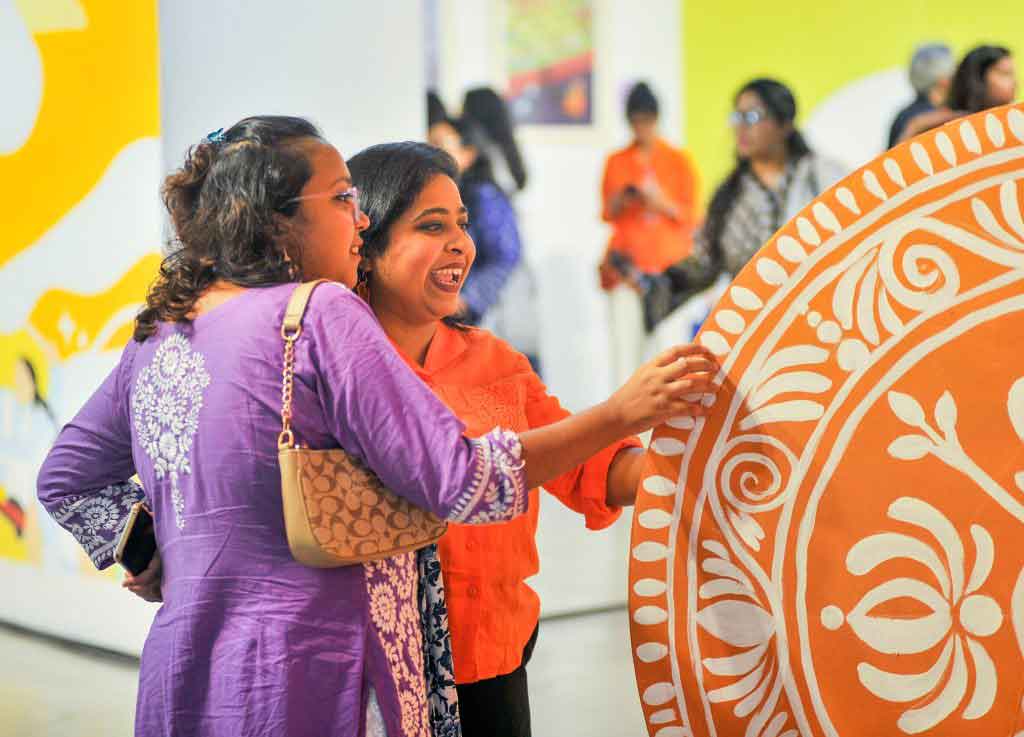
Inside the exhibition, creativity and collaboration filled every corner of the space. Three live murals grew gradually over the course of the festival, each telling a unique story of resistance, hope, and unity. One of these murals, initiated by sisters Ayomoy Aronno and Angona Ahsana, evolved over seven days with contributions from both visiting audiences and fellow artists. Its fluid shapes, rhythmic brushstrokes, and vivid colors symbolized harmony and collective strength. Among the most emotional pieces was “A Letter to Mom,” delicately embroidered on a kantha by artist Nusrat Laxme. Through soft threads and honest words, she expressed both love and unspoken pain, paying tribute to her mother’s resilience and echoing the silent struggles of many women.
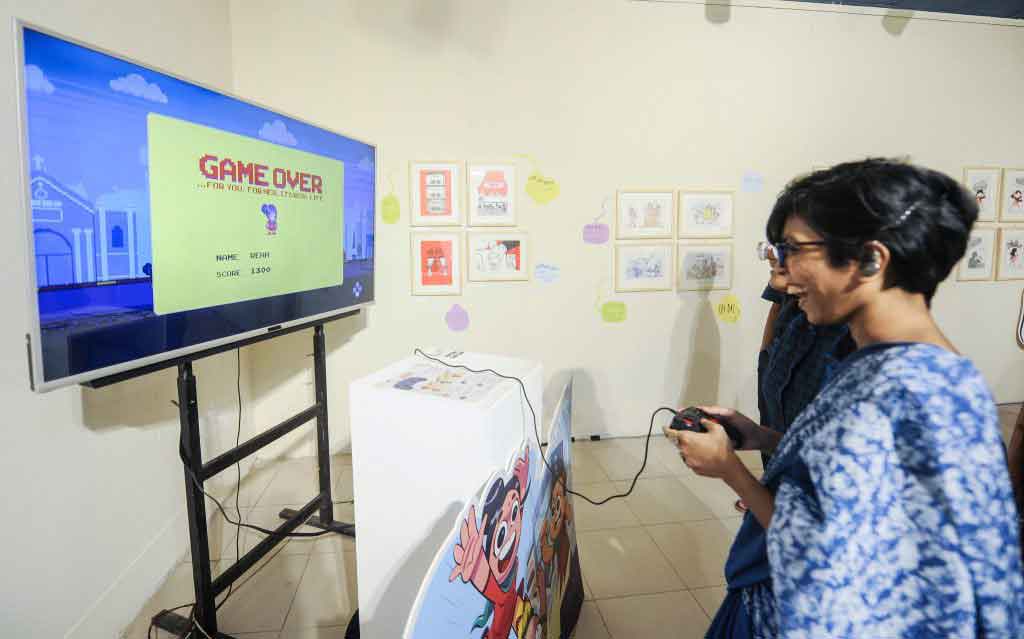
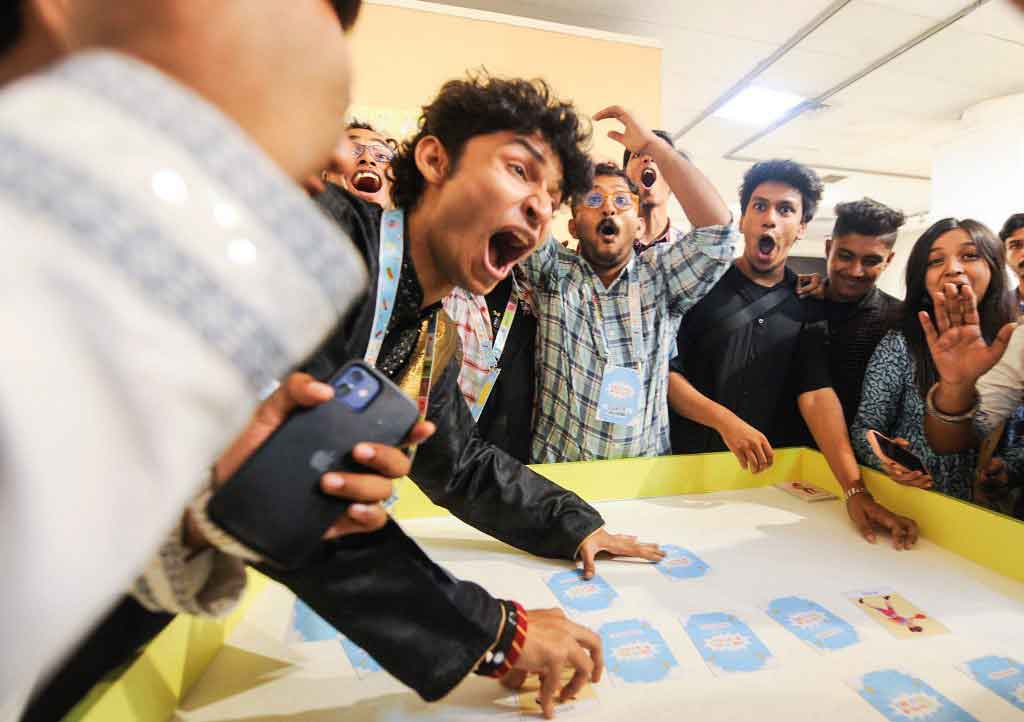
Artist Anika Nawar Eeha added another dimension to the experience by working as a live caricature artist throughout the festival. Her cartoons illustrated the everyday violence women face in workplaces, public environments, homes, and digital spaces. Eeha explained that her intention was to make people notice the issues women encounter regularly—issues that are often overlooked or minimized. Alongside the artworks, the festival featured interactive games such as Dhaka survival and Gender Roles, which encouraged visitors to challenge stereotypes, recognize harmful behaviors, and reflect on social norms in a playful yet thought-provoking way. Several installations further enriched the environment, blending humor, symbolism, and visual storytelling to create an immersive, emotionally engaging experience.
Through its vibrant colors, powerful themes, and courageous voices, Cartoons for Equality transformed the exhibition walls into mirrors reflecting both the society we live in and the future we hope to build. Tanmoy shared that the goal was always to raise awareness, start conversations, and protest—in ways that only art can. This festival stands as a reminder that cartoons are more than entertainment; they are tools for dialogue, activism, and social transformation.At its core, Cartoons for Equality is a celebration of creativity, courage, and the belief that art can spark real change. By bringing together artists, activists, students, families, and everyday viewers, the festival created a shared space where difficult truths could be confronted and new possibilities imagined. The event leaves behind not only memories of murals and illustrations but also conversations that continue to grow far beyond the exhibition halls.